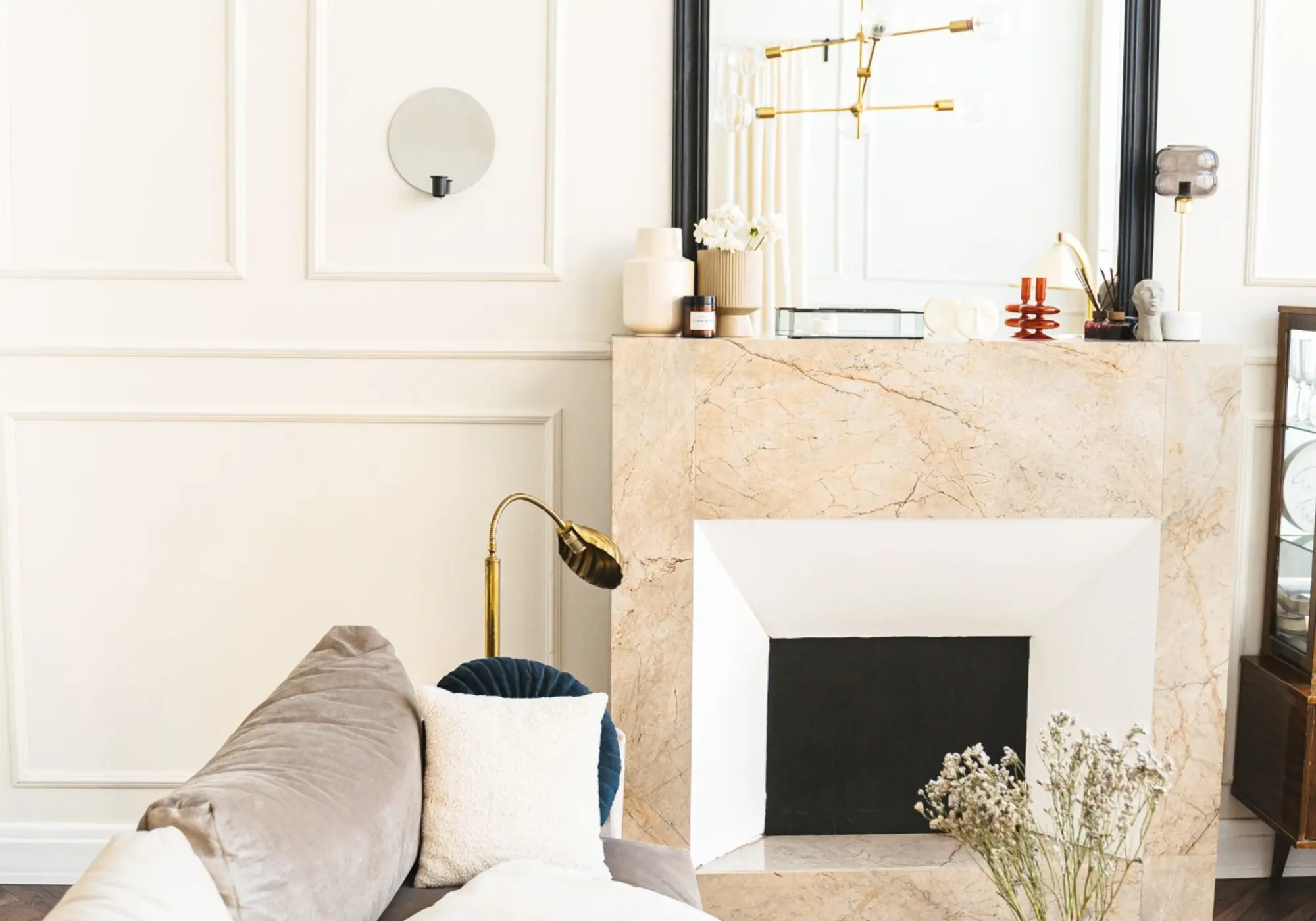
A room can have comfortable furniture, lovely curtains and everything in its proper place, yet still feel as though it belongs to anyone. Art offers something more personal. A landscape can recall a place you love. A drawing can hold a child's early way of seeing. A small sculpture can make an ordinary shelf worth a second look. These are the details that help a house become recognizably yours.
Choose a connection before a color
When choosing art for your home, begin with what holds your attention. Perhaps it is the light in a painting, the expression in a portrait or a photograph that brings back the feeling of a journey. You do not need an art-history vocabulary to recognize a connection. Ask yourself: Would I enjoy seeing this on an ordinary Tuesday? A piece that means something to you has a place in your home even when it does not perfectly match the sofa.
Let your walls carry a little history
An inherited watercolor, an old map of a meaningful place or a photograph from the family album can give a room a sense of continuity. Look through what you already own before shopping. Something tucked into a drawer may deserve a place where it can be enjoyed. A simple frame and a generous mat can give a modest work presence. Keep a note about its artist, place or family connection with it so the story can travel with the piece.
Collect slowly, at a scale you can afford
A thoughtful collection can begin with one print. Explore local artists, student exhibitions, small galleries and vintage shops when the opportunity arises. An original work on paper may fit a smaller budget than a large canvas; a reproduction can offer daily enjoyment without the cost of an original. Know which you are purchasing and choose within your means. Leave room in both your budget and your home for discoveries that come later.
Give the art a place in everyday life
Think about the views you enjoy most: the wall opposite your breakfast chair, the passage to the bedroom, the corner beside your reading lamp. Those are good places to consider. Above furniture, let the artwork feel connected to the grouping below it instead of floating near the ceiling. Before making holes, try paper templates on the wall and look from both a standing and a seated position. Use hanging hardware appropriate for the weight and wall type.
Mix old and new with a little restraint
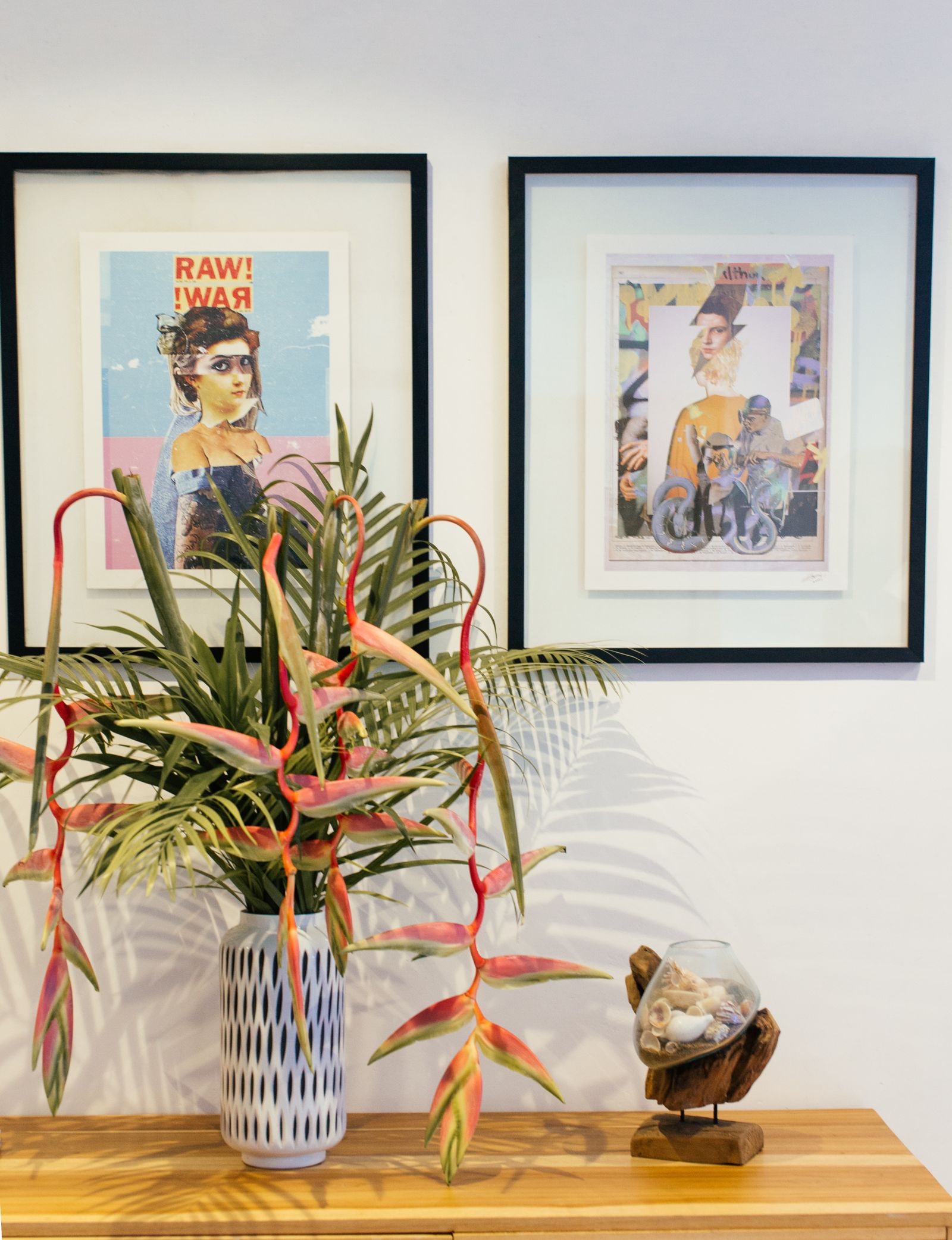
Traditional art can bring depth to a contemporary room, and a modern print can add freshness beside an antique chest. The pieces need not come from the same period. Give them something to share: a recurring color, similar matting or a balanced arrangement. For a small gallery wall, lay the frames on the floor first and work outward from an anchor piece. Leave enough space between them to see each work clearly. A wall does not have to be full to feel finished.
Look beyond the frame
Art at home can also be a handmade bowl, a woven textile or a sculptural object. A console or shelf gives these pieces somewhere to be appreciated. Try one taller object beside a lower form, then leave some open space around them. Decorative accents can support the arrangement, but the piece you love should remain easy to notice. Resist filling every gap; a little breathing room helps the eye settle.
Care for what you choose
Notice how sunlight moves through the room before choosing a permanent spot. Keep delicate works on paper away from direct sun, damp areas and heat sources. For an original or sentimental piece, ask a framer about suitable protective materials. Check how the glass reflects nearby windows and lamps so the work can be seen comfortably. Good placement is as much about caring for the piece as it is about making the room beautiful.
Begin with one piece this week
Choose something you already love and give it a considered place. Clear the surface beneath it, adjust what surrounds it and spend a few days noticing how it changes the room. There is no need to finish an entire collection at once. A home gains character as life happens within it. Art makes room for memory, curiosity and the beauty you want to return to each day.